Visualizing the Invisible: The Role of 3D Render DNA with Coronavirus Design in Modern Media
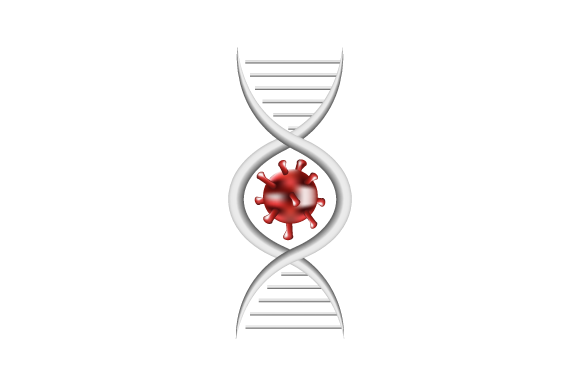
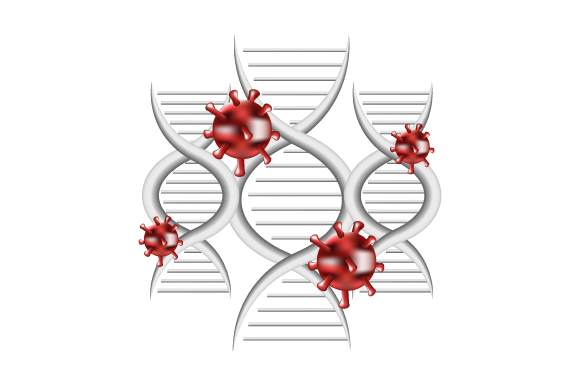
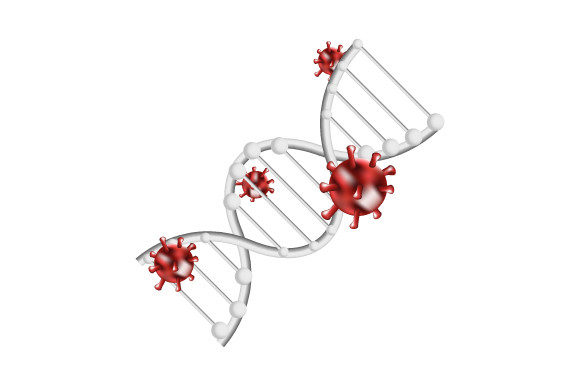
In the realm of digital art and scientific visualization, few subjects have captured the imagination quite like the intersection of biology and technology. The 3d render dna with coronavirus design has emerged as a powerful visual motif that bridges the gap between complex medical data and accessible graphic design. This specific imagery is not merely an artistic choice; it represents a convergence of virology, computer graphics, and storytelling. By isolating these intricate structures against clean backgrounds, creators can convey urgency, scientific precision, or abstract concepts related to health and biology without relying on cluttered text.
The versatility of these assets allows them to serve multiple functions simultaneously. Whether used as a primary background for a news article, a decorative element in a presentation, or a standalone piece of concept art, the detailed rendering of viral particles intertwined with genetic material offers a level of depth that traditional illustrations cannot match. The ability to access these files in various formats—ranging from vector-based AI and EPS to rasterized JPG and PNG—ensures that the final output remains crisp regardless of the medium, from a massive billboard to a mobile device screen.
The Anatomy of the Visual Metaphor
To understand the value of this design, one must first appreciate what is being depicted. A standard representation of the coronavirus involves the characteristic spike proteins protruding from a spherical envelope. When paired with 3d render dna with coronavirus design isolated for decoration, the image often incorporates helical strands or double-helix structures to symbolize the genetic code within the virus or the human genome's response to it. This combination creates a narrative of interaction: the pathogen versus the biological defense, or the mutation process itself.
The use of three-dimensional rendering adds a layer of realism that flat vector graphics lack. Lighting, shadows, and texture play crucial roles in making the virus appear tangible. High-quality renders utilize subsurface scattering to give the viral capsid a semi-translucent quality, while the DNA strands are often rendered with a glowing or metallic finish to distinguish them from the organic virus structure. This contrast helps viewers instantly grasp the relationship between the two elements. For educators and researchers, this visual clarity is invaluable when explaining mechanisms of infection or genetic sequencing.
Furthermore, the isolation of these elements is a deliberate design choice. By removing distracting environmental factors, the focus remains entirely on the structural integrity and complexity of the subject. This technique allows designers to overlay text, integrate other graphical elements, or place the image within a collage without the need for extensive masking or editing. The result is a clean, professional look that elevates the perceived authority of any content it adorns.
Practical Applications Across Industries
The utility of high-fidelity biological imagery extends far beyond simple illustration. Professionals across diverse sectors leverage these assets to communicate complex ideas quickly and effectively. In the healthcare sector, hospitals and clinics often utilize 3d render dna with coronavirus design in informational brochures and waiting room displays to explain hygiene protocols or vaccine development progress. The visual serves as a calming yet serious reminder of the science behind public health measures.
- Media and Journalism: News outlets require immediate visual recognition during breaking stories. A dynamic, rotating 3D model or a static, high-resolution PNG of the virus provides instant context for articles discussing outbreaks, mutations, or epidemiological trends.
- Education and Research: Teachers and professors use these isolated designs to create interactive slides and textbooks. The ability to separate the DNA strand from the virus particle allows students to visualize how genetic material is packaged within the viral shell.
- Marketing and Branding: Biotech companies and pharmaceutical firms use these visuals to brand their research initiatives. A sleek, modern rendering suggests innovation and cutting-edge technology, reinforcing trust in the company's capabilities.
- Web Design and UI/UX: Developers frequently incorporate these elements as loading screens or section dividers for health-related websites. The EPS format ensures that the graphics scale perfectly on retina displays, maintaining sharpness at any zoom level.
For hobbyists and independent creators, these files offer a gateway into the world of scientific illustration. Without needing advanced modeling skills, a designer can take a pre-rendered asset and manipulate its color palette, orientation, or lighting to fit a specific project theme. This democratization of high-quality imagery allows small businesses and individual artists to compete visually with larger organizations.
Technical Advantages of Multi-Format Availability
The true power of these digital assets lies in the variety of file formats provided. Each extension serves a specific purpose in the creative workflow, ensuring maximum flexibility for the end-user. Understanding how to utilize each format is key to achieving professional results.
The AI (Adobe Illustrator) and EPS (Encapsulated PostScript) formats are the gold standards for vector-based workflows. These files contain mathematical definitions of lines and shapes rather than pixels. This means that a designer can resize a 3d render dna with coronavirus design from a business card to a skyscraper banner without losing a single pixel of detail. Vector formats are essential for print media, large-scale signage, and any application where scalability is paramount. They also allow for easy color adjustments and manipulation of individual components within the composition.
Conversely, the JPG and PNG formats cater to web and screen-based applications. While JPGs are efficient for reducing file size through compression, they do not support transparency. However, for background images on websites where a solid color or gradient is desired, a compressed JPG is often the most practical choice. On the other hand, PNG (Portable Network Graphics) files support alpha channels, allowing for transparent backgrounds. This is critical when using the 3d render dna with coronavirus design isolated for decoration. A PNG allows the user to place the virus and DNA directly over a colored background, a photograph, or a complex pattern without seeing a white box around the edges.
This multi-format approach eliminates the need for users to re-render the entire scene themselves. Instead of spending hours adjusting lighting or geometry in 3D software, professionals can download the ready-to-use files and focus on integration. It streamlines the production pipeline, saving time and resources while maintaining high visual fidelity.
Design Considerations and Best Practices
While the availability of these assets is convenient, effective usage requires a thoughtful approach to design. One common pitfall is the overuse of dramatic imagery. In a landscape filled with global health concerns, the depiction of viruses can be emotionally charged. Designers must balance the scientific accuracy of the 3d render dna with coronavirus design with the emotional tone of the message they wish to convey.
Color theory plays a significant role here. Traditional depictions often use reds and oranges to signify danger, but cooler tones like blues and greens can evoke a sense of clinical safety and scientific inquiry. By manipulating the color grading of the isolated elements, a creator can shift the perception of the image from threatening to informative. For instance, a blue-tinted DNA strand against a dark background might suggest mystery and discovery, whereas a bright red virus could imply urgency.
Composition is another vital factor. Because these elements are often isolated, they provide ample negative space. Smart designers use this space to frame text or guide the viewer's eye through the layout. Placing the virus and DNA in the corner of a slide, for example, can leave the center open for bullet points or key statistics. Alternatively, centering the image can make it a focal point for a hero section on a landing page. The goal is to ensure the image supports the content, not overwhelms it.
Additionally, attention should be paid to the resolution and aspect ratio. Even with scalable vectors, the initial source resolution matters for raster effects like shadows and glows. When preparing assets for web use, exporting at 72 DPI is standard, but for print, 300 DPI is required to prevent blurriness. Ensuring the correct dimensions for the intended platform prevents pixelation and maintains the professional quality of the final product.
The Future of Scientific Visualization
As we move forward, the demand for accurate and engaging scientific imagery is only expected to grow. The line between entertainment and education continues to blur, with video games, virtual reality experiences, and augmented reality apps increasingly incorporating real-world biological models. The 3d render dna with coronavirus design serves as a precursor to this future, demonstrating how static images can evolve into interactive experiences.
In the coming years, we may see these assets transition from static files to dynamic 3D objects that users can rotate and explore on their own devices. The principles established by current vector and raster formats will remain relevant, but the delivery method will change. Educators might use these models in VR headsets to walk students through the molecular structure of a virus, while marketers might use AR filters that allow consumers to "see" the virus on their hands to emphasize the importance of handwashing.
The adaptability of these designs ensures they will remain relevant tools for communication. Whether it is a researcher presenting data at a conference, a student creating a poster for a science fair, or a business owner launching a new health product, the ability to visualize the invisible is a superpower. By utilizing high-quality AI, EPS, JPG, and PNG files, creators can tell compelling stories that resonate with audiences on both an intellectual and emotional level.
Ultimately, the 3d render dna with coronavirus design is more than just a picture; it is a language. It speaks to our collective understanding of biology, our fear of the unknown, and our hope for scientific solutions. By mastering the use of these assets, professionals and hobbyists alike can contribute to a clearer, more informed dialogue about the world around us. The combination of technical precision and artistic expression found in these files makes them indispensable resources for anyone looking to elevate their visual communication in the digital age.