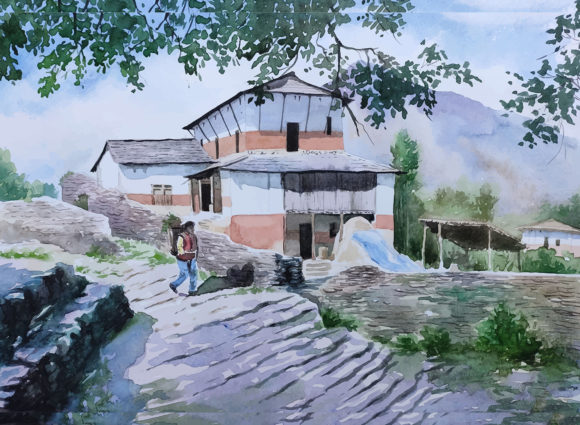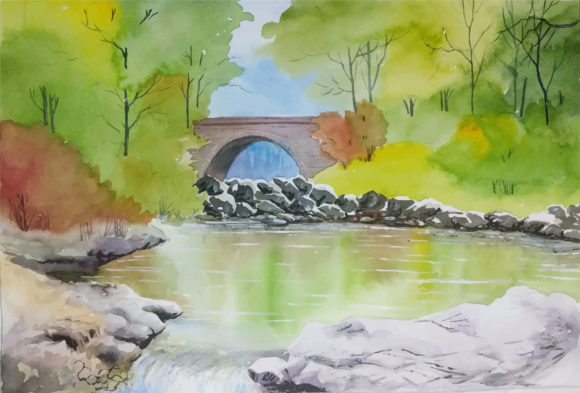
Watercolor Hand Drawn Scenic Bridge
In a digital landscape saturated with sterile, geometric perfection and algorithmically generated imagery, there is a distinct hunger for warmth, texture, and human touch. This is where the Watercolor Hand Drawn Scenic Bridge steps in as more than just an asset; it serves as a bridge between the organic past and the efficient present. Whether you are a branding specialist looking to inject soul into a corporate identity or a hobbyist designer seeking that perfect accent for a wedding invitation, understanding the value of high-quality, hand-drawn vector art is crucial.
The concept might seem simple at first glance—a bridge rendered in watercolor style—but the execution requires a nuanced understanding of both traditional artistic principles and modern vector technology. When we talk about this specific design element, we are discussing a piece that captures the fluidity, transparency, and unpredictability of wet-on-wet painting techniques, yet retains the crisp scalability and editability of vector graphics. It is not merely a JPEG slapped onto a canvas; it is a meticulously crafted digital artifact designed for versatility and impact.
The Intersection of Art and Technology
Why choose a watercolor aesthetic over a flat illustration or a photograph? The answer lies in emotional resonance. Watercolor has long been associated with creativity, softness, and authenticity. A scenic bridge, specifically, carries symbolic weight. Bridges represent connection, transition, journey, and stability. By combining these two elements—watercolor’s emotional appeal and the bridge’s structural symbolism—you create a visual metaphor that works across numerous industries.
However, traditional watercolors have limitations. They fade, they tear, and they cannot be easily resized without losing quality. This is where the "High Quality 3d Realistic" aspect of the Watercolor Hand Drawn Scenic Bridge becomes transformative. The term "3D realistic" here does not imply photorealism in the photographic sense, but rather depth, dimensionality, and volume achieved through sophisticated shading and lighting effects within the vector format. The brushstrokes appear to have texture, the shadows cast by the arches feel tangible, and the color gradients flow naturally, mimicking the behavior of real pigment on paper.
Understanding the Vector Advantage
A common misconception among beginners is that hand-drawn styles must be raster-based (pixelated) images like PNGs or JPEGs. While true for scanned physical paintings, modern design tools allow artists to recreate these organic looks using vectors. This means every curve, splash, and gradient is defined by mathematical paths rather than pixels. The result is a file that can be scaled from the size of a business card to the height of a billboard without any loss of clarity or jagged edges.
This technical capability is what makes the Watercolor Hand Drawn Scenic Bridge so valuable for professionals. You are getting the best of both worlds: the aesthetic charm of a handmade sketch with the functional reliability of a vector file. For marketers and entrepreneurs, this translates to assets that look premium regardless of the medium they are printed or displayed on.
Practical Applications Across Industries
The versatility of this design allows it to fit seamlessly into various professional and personal projects. Let’s look at how different sectors can leverage this asset.
- Branding and Identity: For boutique hotels, travel agencies, or architectural firms, the scenic bridge evokes a sense of place and journey. Using it in a logo or brand collateral suggests reliability and elegance. The watercolor texture prevents the brand from feeling too corporate or cold.
- Publishing and Editorial: Bloggers and publishers often struggle to find unique headers that don’t look stock-photo generic. A hand-drawn bridge provides a distinctive visual anchor for articles about travel, history, engineering, or personal growth. Its artistic nature invites readers to linger longer on the page.
- Event Design: Weddings, galas, and cultural festivals frequently use bridges as metaphors for union and celebration. The Watercolor Hand Drawn Scenic Bridge is particularly effective for invitations, save-the-dates, and stage backdrops because its soft edges complement floral arrangements and romantic themes.
- Educational Materials: Educators creating presentations or textbooks can use this image to illustrate concepts related to geography, civil engineering, or literature. The high-quality vector format ensures that diagrams remain clear when projected in large lecture halls.
Commercial Viability and Efficiency
For freelancers and agency owners, time is money. The promise of being "very easy to just print" is not just marketing fluff; it is a significant workflow advantage. Because the file is vector-based, you do not need to spend hours tracing or cleaning up low-resolution scans. You can import the file directly into Adobe Illustrator, InDesign, or even Canva, adjust colors to match your client’s palette, and export it in any format required.
The inclusion of a comprehensive pack—including EPS, JPEG, and versioned files—further enhances efficiency. The EPS file is ideal for professional printing services that require precise cut lines and high-resolution data. The JPEG provides immediate accessibility for quick social media posts or email newsletters. Having multiple versions allows you to test different layouts or color schemes without starting from scratch, speeding up your production cycle significantly.
Evaluating Quality and Usability
When selecting a digital asset like the Watercolor Hand Drawn Scenic Bridge, it is important to look beyond the preview image. High-quality vector art should exhibit clean node structures, logical layer organization, and accurate color representation. If the watercolor effect relies on heavy, pixelated filters rather than actual vector shading, it will fail under close inspection or when scaled up.
The "ready to use" feature implies that the artist has already solved common problems such as transparent backgrounds, proper grouping of elements, and standardized color modes (CMYK for print, RGB for screen). This reduces the risk of errors during the final output phase. For non-designers, this means you can trust the asset to work correctly in most standard design software without needing advanced technical skills.
Furthermore, the aesthetic quality contributes directly to user experience. In web design, for instance, custom illustrations break the monotony of text-heavy pages and guide the user’s eye. A well-placed scenic bridge can serve as a visual pause, allowing the audience to digest information before moving to the next section. This subtle improvement in engagement can lead to higher retention rates and better overall communication of your message.
Final Thoughts on Integration
Ultimately, the decision to incorporate the Watercolor Hand Drawn Scenic Bridge into your projects is about elevating the perceived value of your work. In an era where consumers are bombarded with content, standing out requires authenticity. Hand-drawn elements signal that care was taken in the creation process, fostering a deeper connection with your audience.
Whether you are designing a packaging label for an artisanal coffee brand, creating a slide deck for a startup pitch, or illustrating a children’s book, this asset offers a blend of beauty and functionality that is hard to replicate manually. By choosing a high-quality vector source, you ensure that your creative vision remains intact from the initial sketch to the final product. Embrace the texture, leverage the scalability, and let the scenic bridge carry your design to new heights.